


Choosing the right 5 Axis Mill is rarely a simple matter of comparing prices. Global buyers must examine machine geometry, control software, spindle performance, service access, and long-term operating costs. A compact mill may fit a small workshop beautifully, yet struggle with large aerospace components. Another model may offer impressive speed, but require expensive tooling and advanced programming skills.
Professor Yusuf Altintas, a leading authority in machining dynamics, has emphasized: “Machining performance depends on the machine, tool, workpiece, and process.” That point matters when reviewing five-axis equipment. Accuracy on a brochure does not guarantee accurate parts on the shop floor. Buyers should inspect sample cuts, rotary-axis backlash data, thermal compensation, and real cycle-time results. Ask for evidence, not promises.
This guide compares five practical 5 Axis Mill options for international purchasers. It considers work envelope, simultaneous machining capability, spindle range, automation, software compatibility, and supplier support. It also looks at training, spare parts, installation requirements, and regional technical assistance. These details can determine whether a machine becomes a productive asset or an expensive obstacle.
No ranking is perfectly universal. A medical-device manufacturer may value repeatability above speed. A job shop may prefer flexibility and easier maintenance. Buyers should challenge every recommendation against their materials, tolerances, workforce, and expected workload. Even small omissions can become costly later. A careful decision begins with realistic production needs, not attractive specifications alone.
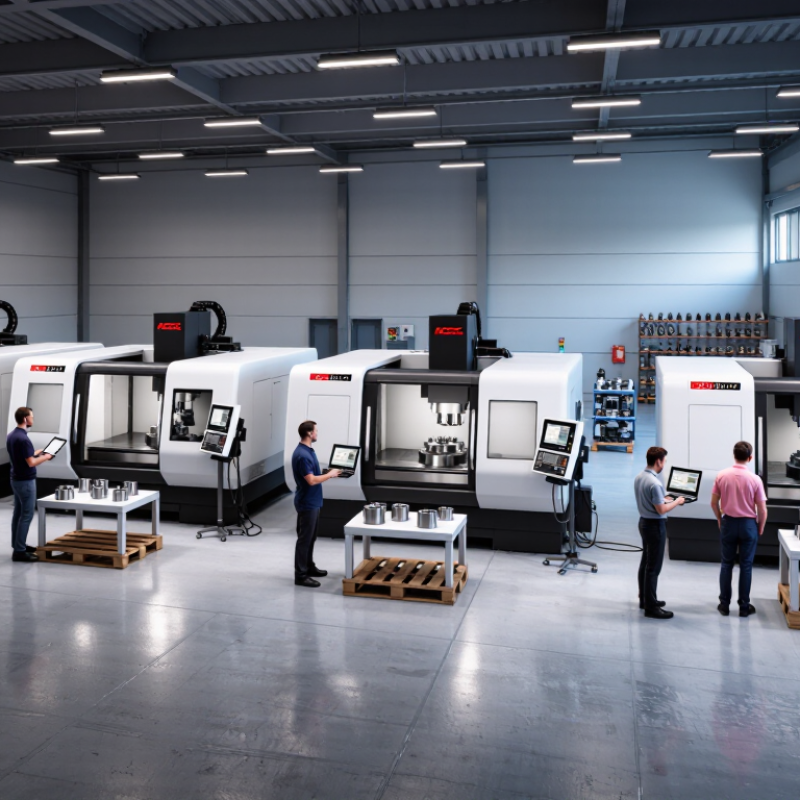
A 5-axis mill is a machining center that moves a cutting tool along three linear axes and two rotary axes. The linear axes control length, width, and height. Rotary axes tilt or spin the workpiece, the tool, or both. This movement lets the cutter reach angled surfaces without repeated repositioning.
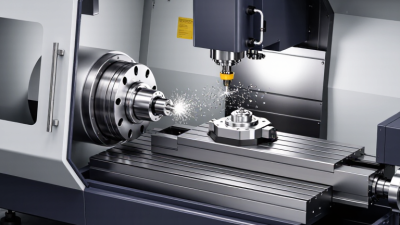
During simultaneous machining, all five axes can move together. The tool maintains a better angle against curved surfaces, such as turbine blades, medical components, or detailed molds. A 3+2 process is different. The rotary axes set a fixed position, while the three linear axes perform the cut. This method is often easier to program and verify.
Tips: Global buyers should inspect the controller, axis travel, spindle speed, and local service support. Ask for a sample cut, not only a specification sheet. Confirm the postprocessor matches your CAM system. A small mismatch can create expensive errors. Use collision simulation before production, especially with long tools and deep cavities. Cutting results also depend on workholding, thermal stability, and operator training. The machine is powerful, but it is not magic. In my experience, buyers sometimes focus on axis count and overlook maintenance access. That choice can slow production later. A practical test with your own material reveals more than impressive showroom footage.
A five-axis mill simultaneously controls three linear axes (X, Y, and Z) and two rotary axes. This allows the cutting tool to reach multiple faces of a part in a single setup, reducing repositioning, alignment errors, and machining time.
| 5-Axis Mill Option | Typical Machine Architecture | Common Working Envelope | Typical Rotary Range | Typical Spindle Taper | Best Applications | Main Advantages | Key Buying Considerations | Buyer Suitability |
|---|---|---|---|---|---|---|---|---|
| Trunnion-Table 5-Axis Mill | The workpiece is mounted on a tilting rotary table, while the spindle moves along the linear axes. | Approximately 400–1,000 mm X travel, 300–700 mm Y travel, and 350–700 mm Z travel. | Rotary axis: 360°; tilting axis: typically +30° to −120°, depending on machine design. | BT30, BT40, HSK-A63, or equivalent. | Medical components, aerospace parts, impellers, molds, dies, and small-to-medium complex components. | High rigidity, strong repeatability, excellent access to five faces, and relatively simple programming for many applications. | Check table diameter, maximum workpiece height, rotary-axis load capacity, collision clearance, and whether the table reduces usable Z height. | |
| Swivel-Head 5-Axis Mill | The spindle head tilts and rotates while the workpiece remains fixed on the machine table. | Approximately 600–2,000 mm X travel, 500–1,000 mm Y travel, and 500–1,200 mm Z travel. | Head rotation commonly reaches 360°; tilt ranges may include ±90° or wider configurations. | BT40, BT50, HSK-A63, HSK-A100, or equivalent. | Large aerospace structures, turbine components, molds, energy equipment, and long or heavy workpieces. | Handles larger parts than many trunnion machines and keeps the workpiece stationary during machining. | Evaluate head stiffness, rotary-head accuracy, spindle extension, volumetric accuracy, and accessibility at extreme tilt angles. | |
| Mill-Turn 5-Axis Center | Combines milling with turning through a rotating workholding system, often including live tooling and a second spindle. | Approximately 500–1,000 mm turning diameter range and 500–1,500 mm machining length, depending on configuration. | C-axis: 360° continuous; B-axis commonly around ±120° to ±135°. | HSK-A63, HSK-T, Capto, or equivalent turning and milling interfaces. | Valves, shafts, flanges, pump bodies, aerospace fittings, and parts requiring both turning and angled milling. | Combines multiple processes in one setup, reduces workholding changes, and can improve concentricity between turned and milled features. | Confirm chuck or collet capacity, bar-feed compatibility, turning diameter, live-tool power, chip control, and post-processor support. | |
| Gantry-Style 5-Axis Mill | A bridge or gantry carries the cutting head over a large stationary table or fixture area. | Approximately 1,500–6,000 mm X travel, 1,000–3,000 mm Y travel, and 600–1,500 mm Z travel. | Head-based rotary axes commonly provide continuous rotation and tilt ranges near ±90°. | BT50, HSK-A100, HSK-A125, or high-torque equivalent. | Aircraft structures, marine components, wind-energy parts, large molds, transportation equipment, and oversized castings. | Large work envelope, stationary workpiece support, good access for oversized components, and compatibility with heavy-duty cutting. | Review floor-space requirements, foundation needs, gantry rigidity, thermal compensation, transport restrictions, and installation costs. | |
| Compact 5-Axis Mill | A small trunnion or swivel-head design optimized for limited floor space and smaller workpieces. | Approximately 200–600 mm X travel, 200–500 mm Y travel, and 250–500 mm Z travel. | Rotary axis: 360°; tilting axis commonly around ±110° to ±135°. | BT30, BT40, HSK-A40, or equivalent. | Prototype production, dental and medical parts, electronics components, small molds, precision job shops, and education. | Lower space requirement, reduced setup cost, efficient production of small complex parts, and easier integration into compact workshops. | Check maximum part diameter, spindle power, tool capacity, thermal stability, automation options, and whether the small table limits fixture access. |
Typical ranges are industry reference values rather than specifications for a particular machine. Actual travels, load capacities, accuracy, spindle speed, and rotary-axis limits vary by configuration and manufacturer. Buyers should compare verified technical drawings, test-cut results, local service coverage, electrical requirements, and export-support capability before purchasing.


North of Industrial Road, Linqing Economic Development Zone,Liaocheng City, Shandong Province, China
w.eric@lucimagnet.com
Eric: 0086-15688878114
Surface Grinder Machining Center CNC Lathe Machine Boring and Milling Machines
Semiconductor Optics Automobile Molding Construction Machinery Shipping Aerospace Valve Industry Wind Power Industry Abrasives Industry Refractory Industry Ceramic Seal Industry Bearings Industry
Company Patent Certificates Factory Tour Team Member Our Partner Our History Real-time Factory Inspection R&D Strength Terms & Conditions Privacy Statement


© 2025 Shandong Linmo CNC Machine tool Equipment Co.,Ltd. All Rights Reserved.

