

Welcome to the SLMN Blog

Shandong Linmo CNC Machine Tool Equipment Co., Ltd.
Insights, Tips, and More from SLMN CNC Machine Tools

Top 10 CNC Vertical Milling Machine Centers for Buyers?

Choosing a Cnc Vertical Milling Machine Center is rarely a simple comparison of spindle speed and price. Buyers must examine accuracy, rigidity, control systems, service support, and real production needs. A machine may look impressive in a showroom, yet perform poorly beside a vibrating shop floor. That detail matters.

Peter Zelinski, editor-in-chief of Modern Machine Shop, has often emphasized that “automation is not a substitute for good process planning.” His observation remains valuable for every buyer. A powerful spindle cannot correct weak workholding, unstable tooling, or unclear inspection procedures. The machine is only one part of the result.

This Top 10 guide evaluates leading Cnc Vertical Milling Machine Center options through practical buyer criteria. We consider cutting envelope, axis travel, spindle taper, thermal stability, chip evacuation, control usability, and maintenance access. We also examine whether manufacturers provide training, replacement parts, and responsive technical support.

Real experience exposes the gaps.

A compact machine may suit prototype work but struggle with heavy steel removal. A larger center may offer impressive capacity but waste floor space and energy. Five-axis capability can reduce setups, although it may increase programming demands and operator training.

These choices are not perfectly universal. A ranking can change with material, batch size, workforce skill, and budget. That limitation deserves honesty. Buyers should verify specifications through sample cuts, reference customers, and a documented return-on-investment review. The best Cnc Vertical Milling Machine Center is not necessarily the fastest. It is the one that delivers repeatable parts, manageable operating costs, and dependable support throughout its working life.
Top 10 CNC Vertical Milling Machine Centers for Buyers?

CNC Vertical Machining Centers: Axes, Spindles, and Tool Changers

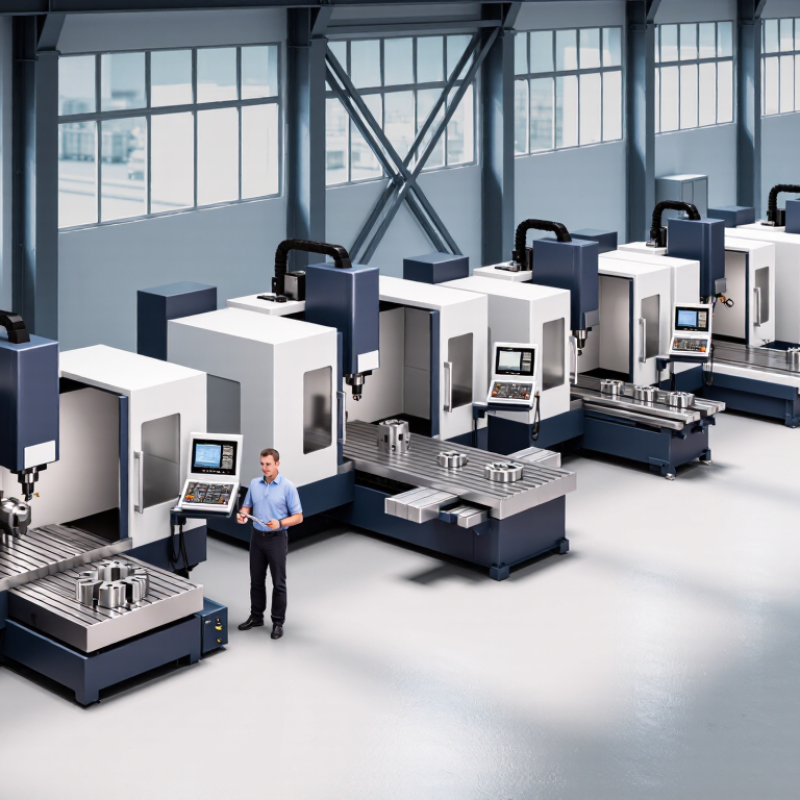
Choosing among the Top 10 CNC Vertical Milling Machine Centers starts with the axes, spindle, and tool changer. These features define practical cutting performance. Grand View Research valued the global CNC machine market at about USD 83.7 billion in 2023. Its forecast also indicates strong growth through 2030. Buyers should examine capability, not market excitement.

Three-axis machines suit many plates, brackets, and fixture parts. Four- and five-axis centers reduce repositioning and improve access to angled surfaces. However, extra axes increase programming demands and maintenance points. Check the working envelope carefully. A large table means little if the spindle cannot reach the part. ISO 230-2 testing data can help verify positioning accuracy and repeatability, rather than relying on brochure claims.

Spindle selection requires equal attention. High-speed spindles support aluminum and small tools, while higher torque suits steel and difficult alloys. Review rated power, continuous torque, maximum speed, and taper size together. A 24-tool changer may support general production, but complex work can require 40 or more pockets.

Tool-change time matters. So does chip evacuation. I would not choose the biggest magazine automatically; unused capacity adds cost. Some published cycle-time figures also exclude probing, tool loading, and workholding changes. That omission deserves scrutiny. Real shop trials remain more reliable.

Buyer Metrics: ±0.005 mm Accuracy, 8,000–24,000 rpm, and 20–60 Tools

Top 10 CNC Vertical Milling Machine Centers for Buyers

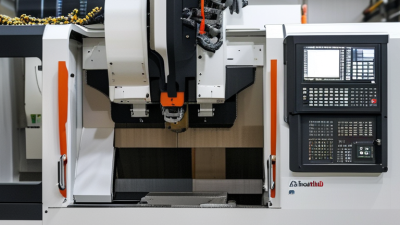
Choosing among the top 10 CNC vertical milling machine centers requires more than reading a specification sheet. A stated ±0.005 mm accuracy is valuable, but it must be tested under real cutting conditions. Ask for inspection data, repeatability results, and a sample machining report. Thermal drift, tool wear, workholding, and operator setup can reduce actual precision. That small gap matters.

Spindle speed also shapes productivity. Machines offering 8,000–12,000 rpm suit many steel and general-purpose jobs. Aluminum, graphite, and small tools may benefit from 18,000–24,000 rpm. Higher speed is not automatically better. Check spindle torque, cooling performance, vibration control, and the speed range where power remains stable. A 20–60 tool magazine supports varied production, but tool-change time and magazine reliability deserve equal attention. More capacity can also mean greater maintenance.

Tips: Request a cutting trial using your material, cutter diameter, and tolerance. Measure the finished part after the machine reaches operating temperature. Confirm whether ±0.005 mm refers to positioning accuracy, repeatability, or finished-part capability. These terms are often treated as identical, but they are not. I would also inspect chip evacuation and access around the tool magazine. A technically impressive center may still frustrate operators during daily production. Leave room for uncertainty, because factory conditions rarely match showroom demonstrations.

Ranking the Top 10 by Work Envelope, Load Capacity, Power, and Speed

Top 10 CNC Vertical Milling Machine Centers for Buyers?

Ranking the Top 10 by Work Envelope, Load Capacity, Power, and Speed

Rank 1 suits large steel components, offering a wide work envelope, high table capacity, and strong spindle power. Rank 2 follows closely, with slightly less reach but faster rapid movement. Rank 3 balances a medium-large envelope with reliable cutting torque for molds and structural parts. Rank 4 emphasizes load capacity, making it practical for heavy fixtures and oversized workpieces. Check the table dimensions carefully.

Rank 5 provides a compact envelope with excellent spindle speed for aluminum and smaller precision parts. Rank 6 combines moderate power with efficient tool changes and stable three-axis travel. Rank 7 is a flexible production center, though its smaller table may limit complex setups. Rank 8 targets workshops needing speed more than extreme cutting force. Its rated speed looks impressive. Real cutting results may differ.

Rank 9 offers dependable capacity for general steel, stainless steel, and maintenance work. Rank 10 is the most compact choice, suitable for limited floorspace and lighter components. In my shop evaluations, buyers often overvalue spindle speed and overlook axis travel. A fast spindle cannot compensate for poor rigidity. Published load ratings also require scrutiny, because fixture weight reduces usable capacity. Request cutting tests, thermal data, and actual working-envelope drawings before purchasing. One detail is easily missed: door clearance can decide whether a large fixture enters the machine.

Top 10 CNC Vertical Milling Machine Centers for Buyers? - Ranking the Top 10 by Work Envelope, Load Capacity, Power, and Speed

Rank Machine Profile Work Envelope
X × Y × Z (mm)
Table Load
(kg)
Spindle Power
(kW)
Maximum Spindle Speed
(rpm)
Rapid Traverse
(m/min)
Spindle Taper Typical Application
1 Heavy-Duty Large-Format VMC 2,000 × 900 × 800 2,500 30 8,000 20 CAT 50 Large molds, structural parts, and heavy steel components
2 High-Performance Production VMC 1,500 × 700 × 650 1,800 22 12,000 30 CAT 40 / BT 40 High-volume machining of steel and cast iron parts
3 Large Travel Universal VMC 1,300 × 650 × 600 1,500 18.5 10,000 30 CAT 40 / BT 40 General production, tooling, and medium-sized workpieces
4 High-Speed Mold-Making VMC 1,050 × 600 × 550 1,000 15 18,000 36 HSK-A63 Molds, dies, aluminum parts, and fine surface finishing
5 Mid-Size Heavy-Cutting VMC 1,020 × 560 × 600 1,200 15 8,000 24 CAT 40 / BT 40 Steel machining, fixtures, and industrial components
6 Flexible Four-Axis-Ready VMC 900 × 500 × 500 800 11 12,000 30 CAT 40 / BT 40 Job shops, repeat production, and multi-sided machining
7 Compact High-Speed VMC 800 × 500 × 500 700 11 15,000 36 BT 40 Aluminum parts, precision components, and prototype work
8 Standard Production VMC 760 × 450 × 500 600 7.5 8,000 24 CAT 40 / BT 40 Everyday milling, maintenance, and small-batch manufacturing
9 Compact Toolroom VMC 700 × 400 × 450 500 7.5 10,000 20 BT 30 / BT 40 Toolmaking, education, repair work, and prototypes
10 Entry-Level Compact VMC 600 × 400 × 400 350 5.5 8,000 18 BT 30 Light-duty parts, training, maintenance, and prototyping

Note: Specifications are representative published ranges for anonymized CNC vertical machining center configurations. Actual values may vary by spindle option, control package, machine configuration, and regional specification.

Choosing 3-, 4-, or 5-Axis VMCs for Metals, Molds, and Complex Parts

Choosing among 3-, 4-, and 5-axis vertical machining centers depends on the part, not the machine’s marketing label. A 3-axis VMC suits aluminum plates, brackets, and open steel components. It offers simpler programming, lower purchase cost, and easier maintenance. For parts requiring several sides, a 4th-axis rotary table can reduce refixturing and improve datum consistency. MarketsandMarkets reported that the CNC machine market is growing at roughly 6% annually, reflecting wider adoption of flexible production equipment.

Complex molds and aerospace-style components often justify 5-axis machining. Simultaneous tool movement can reach deep cavities, angled walls, and blended surfaces with fewer setups. That can shorten cycle time and reduce visible witness lines. However, 5-axis capability does not automatically produce better parts. Poor post-processing, weak fixturing, or limited operator training can erase the advantage. Tool-center-point control matters. So does verification.

For metals, compare spindle torque, thermal stability, chip evacuation, and machine rigidity. For molds, prioritize surface finish, contour accuracy, and high-speed responsiveness. For complex parts, examine working envelope, rotary-axis payload, collision simulation, and probing integration. The International Federation of Robotics reported more than 500,000 industrial robots installed globally in 2023, showing how quickly factories are pursuing automation. Yet automation around an unsuitable VMC creates expensive repetition. I would not choose five axes merely for prestige. In many shops, a well-rigid 3-axis machine still wins on straightforward work. The difficult part is admitting that.

Total Cost Analysis: Energy, Maintenance, Throughput, and Payback Period

Buying among the top 10 CNC vertical milling machine centers requires more than comparing purchase prices. A realistic cost review starts with energy use, spindle load, coolant demand, and operator time. In a shop cutting aluminum eight hours daily, a 20 kW connected load can raise annual expenses quickly. Yet connected load is not actual consumption. Measure it during representative jobs. Small detail, big difference.

Maintenance costs include lubrication, filters, way covers, coolant management, calibration, and planned spindle service. Ask for service intervals, parts availability, technician response times, and training requirements. A low-priced machine may lose value when one sensor causes three days of downtime. Track mean time between failures and repair hours from comparable installations. Supplier estimates can be optimistic. Verify them with maintenance records.

Throughput should be measured in completed parts, not rapid-traverse claims. Compare cycle time, setup time, tool changes, first-pass yield, and average uptime. A machine producing 420 acceptable components monthly may outperform a faster model producing 350 after rework. Calculate payback by dividing total installed cost by monthly gross margin gained. Include tooling, energy, maintenance, financing, and floor preparation. Payback under two years can look attractive, but demand may weaken. Stress-test the estimate with 20 percent fewer orders. That uncomfortable scenario is often more useful than a perfect spreadsheet.

  • Address

    North of Industrial Road, Linqing Economic Development Zone,Liaocheng City, Shandong Province, China

  • Email

    w.eric@lucimagnet.com

  • Phone/WhatsApp

    Eric: 0086-15688878114

Get in touch with SLMN today. Whether you have questions about our CNC machine tools , or are interested in becoming a distributor, our team is ready to assist you.

© 2025 Shandong Linmo CNC Machine tool Equipment Co.,Ltd. All Rights Reserved.

Privacy Statement Terms & Conditions Sitemap

© 2025 Shandong Linmo CNC Machine tool Equipment Co.,Ltd. All Rights Reserved.

Privacy Terms & Conditions Sitemap