

Welcome to the SLMN Blog

Shandong Linmo CNC Machine Tool Equipment Co., Ltd.
Insights, Tips, and More from SLMN CNC Machine Tools

What is a Horizontal Machining Center and Its Advantages?

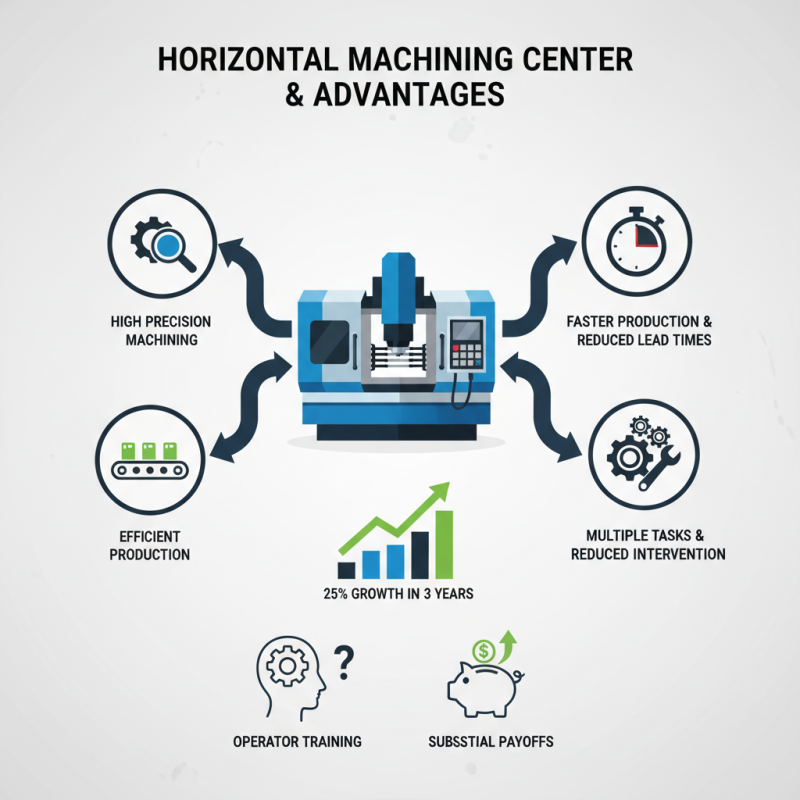
The Horizontal Machining Center (HMC) has revolutionized the manufacturing industry. It enables high precision machining and efficient production. According to a report by the International Federation of Robotics, the use of HMCs has grown by 25% in the last three years. This trend reflects their increasing importance for modern manufacturing needs.

Scott Reynolds, an industry expert, emphasizes, “HMCs can achieve higher accuracy and faster production times.” With their ability to perform multiple tasks in one setup, these machines reduce the need for manual intervention. However, not all manufacturers fully utilize their potential. Some struggle with integration into existing workflows.

The HMC's advantages include improved surface finishes and reduced lead times. Yet, challenges remain. Operators often require extensive training to maximize these machines’ capabilities. Investing in HMC technology necessitates careful consideration, but the payoffs can be substantial for those willing to adapt.
What is a Horizontal Machining Center and Its Advantages?

What is a Horizontal Machining Center?

A horizontal machining center (HMC) is a type of CNC machine tool designed for precision metalworking. Unlike vertical machining centers, HMCs utilize a horizontal spindle. This orientation allows for effective chip management and offers improved access to the workpiece. Generally, HMCs are preferred for larger workpieces or jobs requiring extended setups.

HMCs provide several advantages in heavy-duty machining. They tend to deliver higher rigidity and stability. According to a report from the International Federation of Robotics, precision can improve by up to 30% when utilizing an HMC for complex parts. This leads to reduced cycle times and increased production efficiency. The setup might take longer, but the operational speed often outweighs initial time costs.

However, working with HMCs can come with challenges. Users may find programming to be more complicated compared to simpler machines. Setup times can also be less flexible. Reflections on operational decisions are essential for maximizing a shop's productivity. Understanding their strengths and weaknesses can guide effective utilization and enhance overall workflow. A balanced approach is necessary to leverage the capabilities of horizontal machining centers.

Key Components of Horizontal Machining Centers

What is a Horizontal Machining Center and Its Advantages?

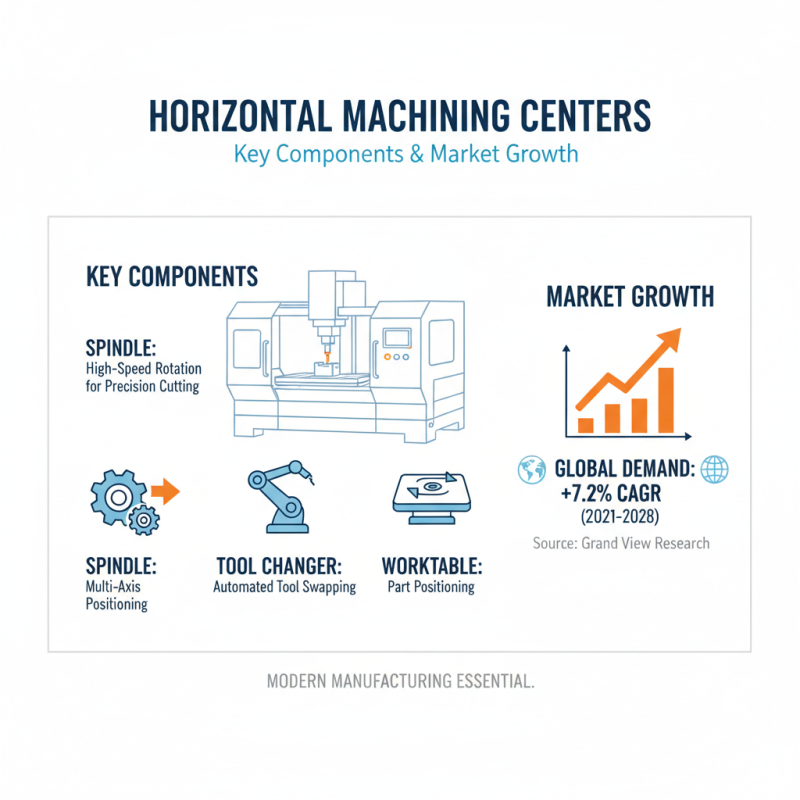
Horizontal machining centers (HMCs) are vital in modern manufacturing. These machines are equipped with a variety of key components that enhance their efficiency. The primary components include the spindle, tool changer, and worktable. The spindle provides high-speed rotation, enabling precision cutting. According to a report by Grand View Research, the global demand for HMCs is projected to grow by 7.2% from 2021 to 2028.

The tool changers play a crucial role in maximizing productivity. They allow for rapid tool replacement, reducing downtime. An average tool changer can hold 30 to 60 tools. This flexibility is essential for facilities handling multiple projects. The worktable in HMCs is typically designed to accommodate heavier workpieces. It can support loads up to 800 kg, making it suitable for complex machining tasks. Yet, it requires careful maintenance to ensure stability.

However, not all HMCs deliver perfect results. Operational challenges may arise, such as setup time and alignment issues. These can lead to inaccuracies in the final product. Manufacturers must conduct regular audits and training for operators. According to Statista, 40% of manufacturers report difficulties in optimizing machining processes. Addressing these challenges is critical for improving output quality. The focus on key components and proper management can make a significant difference in overall performance.

Advantages of Horizontal Machining Centers Over Vertical Models

Horizontal machining centers have unique advantages over their vertical counterparts. One primary benefit is the ability to machine complex parts in a single setup. This reduces setup time and increases efficiency. When working on intricate designs, fewer adjustments mean faster production rates. It's essential to evaluate how this might streamline your processes.

Another advantage lies in chip removal. Horizontal machines are designed to manage chips better than vertical models. Chips fall away from the workpiece naturally, preventing recutting. You might notice some machines struggle with chip management, leading to time lost during cleanup. This efficiency can impact overall machining quality and workflow.

Additionally, the rigidity of horizontal machines can enhance accuracy. They often support larger workpieces, making them ideal for heavy materials. However, it's worth considering the initial investment. These machines can be pricier and necessitate more floor space. If your shop is tight on space, this could be a critical factor to reflect on.

Industry Applications and Use Cases of Horizontal Machining Centers

Horizontal machining centers are highly versatile tools used in various industries for their efficiency and precision. These machines excel in tasks like milling, drilling, and tapping on different materials. In aerospace, horizontal machining centers are critical for producing complex components with tight tolerances. This industry requires utmost precision, and these machines deliver just that.

In automotive manufacturing, horizontal machining centers streamline the production of engine blocks and transmission cases. The ability to perform multiple machining operations in one setup reduces production time significantly. However, the initial investment can be substantial. Not every company can afford the latest technology, which sometimes leads to delayed progress in niche areas of manufacturing.

Medical device production also benefits from these machines, as they create intricate parts with extreme care. The need for reliability in this sector is paramount, making horizontal centers valuable. On the downside, the ongoing maintenance costs can be a burden for smaller manufacturers. They need to weigh the benefits against their budget constraints.

Advantages of Horizontal Machining Centers

Performance Metrics: Speed, Efficiency, and Precision in Machining

In the world of machining, performance metrics are critical. Speed, efficiency, and precision define the success of operations. Horizontal machining centers are designed to excel in these areas. Research shows that these machines can significantly reduce cycle times by up to 30%. This improvement is crucial for manufacturers aiming to stay competitive.


Efficiency is another key factor. Horizontal machining typically allows for greater chip removal rates. Studies have indicated that these centers can achieve a 20% higher material removal rate compared to vertical machining. This means less time spent on each part and more throughput for a shop. However, it's essential to recognize that this can also lead to issues such as tool wear, which requires operator vigilance and effective maintenance strategies.


Precision is paramount in machining. High-quality horizontal machining centers can operate within tolerances as tight as 0.002 inches. This level of accuracy is vital for industries like aerospace and automotive. Yet, even with advanced technology, achieving consistent precision remains a challenge. It demands skilled operators and rigorous quality control processes to avoid defects. Without these practices, production runs can yield unsatisfactory results, leading to wasted materials and time.

  • Address

    North of Industrial Road, Linqing Economic Development Zone,Liaocheng City, Shandong Province, China

  • Email

    info@lucimagnet.com

  • Phone/WhatsApp

    Angela:0086-13884742546
    Eric: 0086-15688878114

Get in touch with SLMN today. Whether you have questions about our CNC machine tools , or are interested in becoming a distributor, our team is ready to assist you.

© 2025 Shandong Linmo CNC Machine tool Equipment Co.,Ltd. All Rights Reserved.
Privacy Statement Terms & Conditions Sitemap

© 2025 Shandong Linmo CNC Machine tool Equipment Co.,Ltd. All Rights Reserved.

Privacy Terms & Conditions Sitemap